  |

|
|
||||||||
|
HOME > LECIEN Lace Museum > Bobbin Lace
|
||||||||||




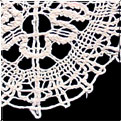
Border (edge trim)
|


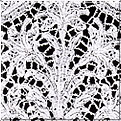 Clergy vestment hem trim |

Lace made in Brussels, Belgium,
In early bobbin lace called point plat (flat point),
Floral and twig motifs and ground were woven simultaneously, but
Under the influence of Alençon lace, patterns came to be added to the ground.
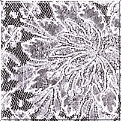 Clergy vestment hem trim
|
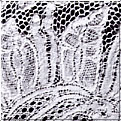 Clergy vestment hem trim
|
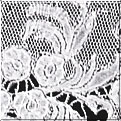 Bottom of Hat
|
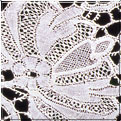 Robe hem trim border
|
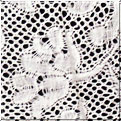
Border
|

Lace made in Binche, Belgium.
Characterized by no outlining on motifs, with a light, meticulous appearance.
Said to have been introduced in the 15th century by Margaret of York, Duchess of Burgundy. Temporarily under French rule in the 17th century, it was influenced by French Baroque and Rococo taste.
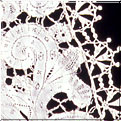
For a statue of the Virgin Mary
Dress Apron 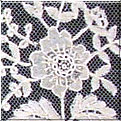
Border
|

A work combining bobbin lace and needlepoint lace.
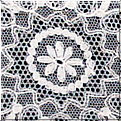
Border (hem trim)
|

Lace woven with silk thread.
This name originated from the use of Chinese silk thread in its natural pale yellow hue; later, delicate pure white lace was made, and by 1840 black lace as well—both became highly fashionable. The lace thread came in two thicknesses: fine thread for the ground and thicker thread for the pattern areas. Characterized by bold satin-like lustrous designs and subtly textured grounds, it was favored in Rococo courts across 18th-century Europe and, in the late 19th century, especially in the French Second Empire court that imitated this style.
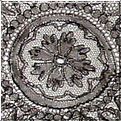
Shawl
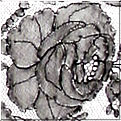 Border (hem trim)
|

Lace made in Chantilly, a city north of Paris.
Initially narrow-width pieces made around the early 18th century for edging lace.
Production ceased temporarily during the French Revolution but flourished again in the Napoleonic era. Made in silk in white and black; black lace was initially cheaper than white and little used, but later worn at court and became highly fashionable.
In the late 18th century, women draped it from hat brims when riding, or attached it to black velvet when wearing masks. In the late 19th century it was also used for shawls and similar items.
This lace is characterized by a diamond mesh ground made by crossing weft threads. Flower baskets, fruit, and similar motifs are woven within, outlined in thick thread.




